



 RU
RU
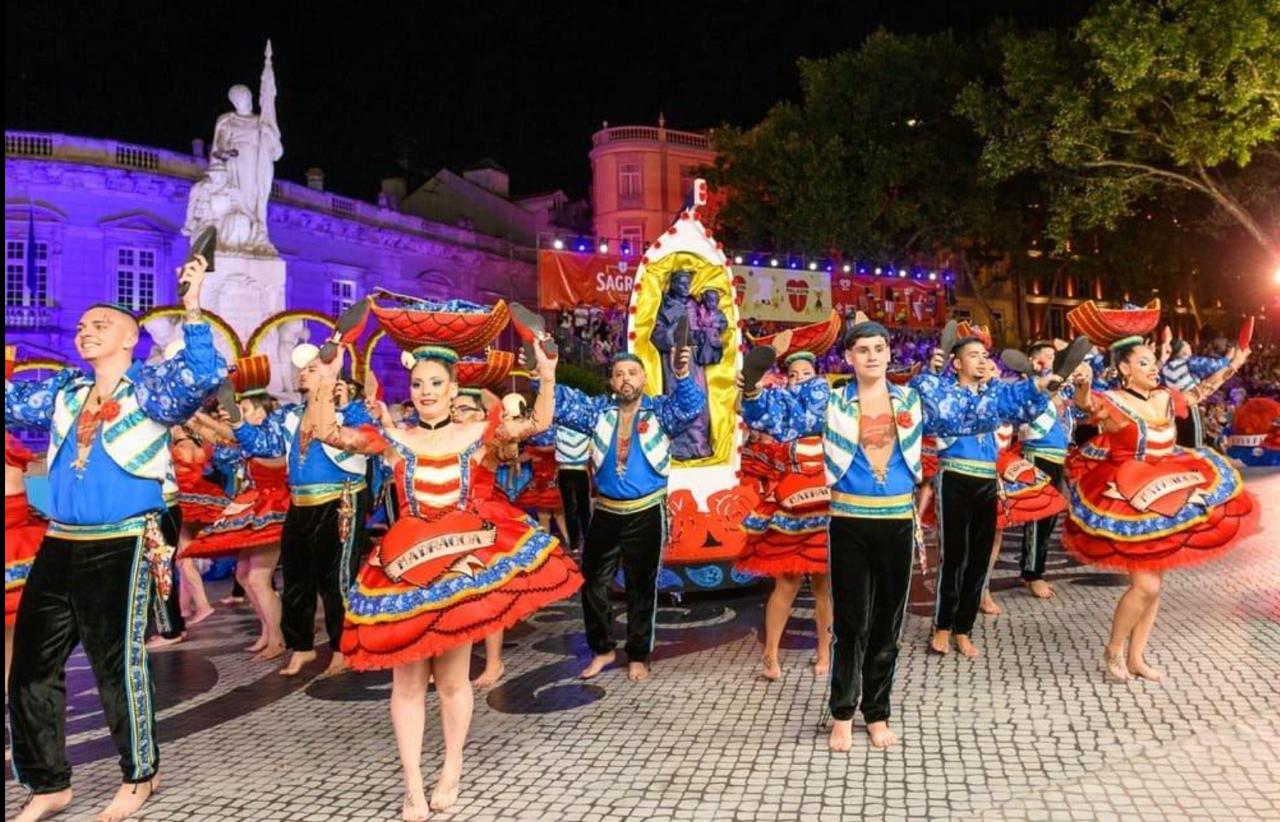
Tomorrow marks the start of the most important festive night of the year in Lisbon. At the heart of it are the Marchas Populares, the traditional parade held in honor of Saint Anthony (Santo António), the city’s patron saint.
While many visitors describe it as a carnival, the Portuguese see it quite differently. It is a long-standing urban tradition in which Lisbon’s neighborhoods compete against one another. Each district prepares its own team, costumes, music, and choreography, with preparations beginning months before June.
The main parade will take place on the evening of June 12 along Avenida da Liberdade. Starting at 9:00 p.m., representatives from the city’s neighborhoods will make their way down Lisbon’s principal avenue before thousands of spectators. Participants include teams from Alfama, Bairro Alto, Bica, Mouraria, Graça, Benfica, Carnide, and many other districts.
The event is free to attend. The best viewing spots along the route are usually claimed well in advance, so anyone hoping to watch comfortably should arrive no later than 7:30–8:00 p.m.
Joining the parade itself is not something that can be done spontaneously. Participants are recruited in advance through neighborhood associations, and rehearsals continue for several months. Watching the spectacle, however, is open to everyone.
In simple terms, the Marchas Populares are something between a civic parade, a folk performance, and a Brazilian carnival — but without the overt carnival aesthetic. There are no giant floats, scantily clad dancers, or Rio-style atmosphere. Instead, the performances are filled with references to Lisbon’s history, maritime culture, historic quarters, fishermen, street vendors, local legends, and everyday life.
Perhaps the most remarkable aspect is that most participants are not professional performers. They are local residents: teachers, shopkeepers, students, retirees, and office workers. For many, taking part in the march is a source of enormous pride. Neighborhoods compete fiercely for the title of the year’s best march.
In spirit, it is closer to each district fielding its own team in a citywide competition. For locals, it is therefore less a show for tourists than a matter of neighborhood identity and prestige. That is why Lisbon residents cheer so passionately for their own communities during the parade.
But the main celebration begins after the official program ends. On the night of June 12–13, Lisbon’s historic neighborhoods — Alfama, Mouraria, Bica, and Graça — transform into one vast open-air festival. Sardines are grilled in the streets, temporary bars and food stalls spring up across the city, live music fills the air, and celebrations continue until dawn.
For many Lisbon residents, this night is considered the true beginning of summer.
