



 RU
RU
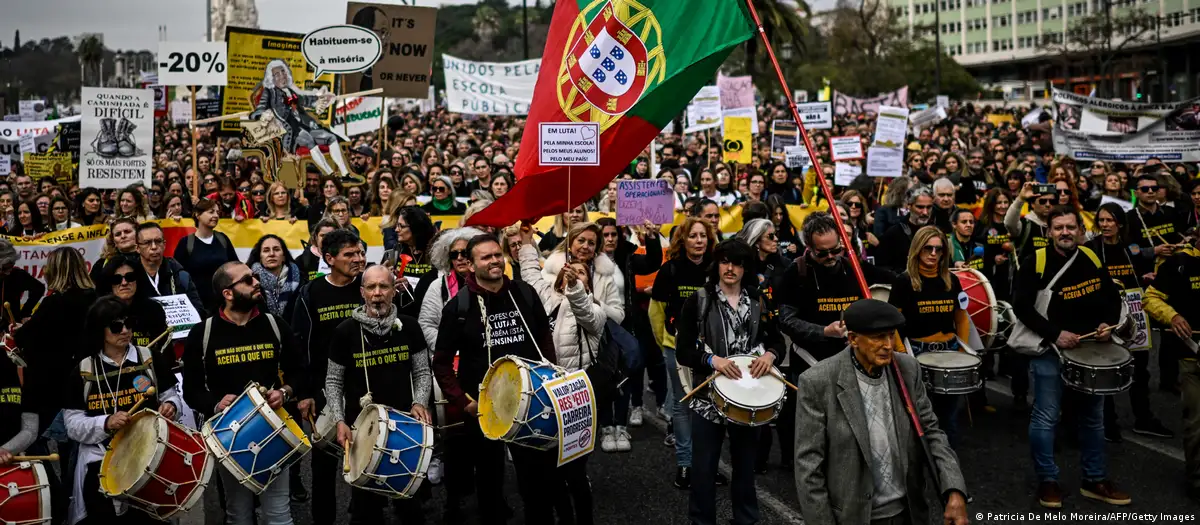
If it feels like news about strikes in Portugal has been appearing with unusual frequency lately, that’s because it has. According to a Euronews ranking compiled using data from Strike Tracker and official labour relations statistics from national authorities, including Portugal’s DGERT, Portugal emerged as the country with the highest number of strikes among a group of EU nations in the first quarter of 2026.
During the first three months of the year, the country recorded 234 strikes and strike notices. By comparison, Italy registered 190, Spain 108, and France 105. Most of the industrial action took place in transport, education, healthcare and the public sector — areas that affect people’s daily lives most directly.
Last week, Portugal experienced its second nationwide strike in the past six months. The latest action was triggered by a new package of labour reforms proposed by the government.
At the same time, this is far from being a uniquely Portuguese phenomenon. In Italy, for example, police officers announced a nationwide strike following a series of attacks on officers while on duty. Across Europe, trade unions are increasingly demanding wage increases that keep pace with rising living costs.
What makes the trend particularly striking is that it comes at a time when trade unions themselves are becoming smaller. In the mid-1980s, around 30% of workers across OECD countries belonged to unions. Today, that figure stands at roughly 15%.
It is an interesting paradox: unions may be shrinking, but the reasons for worker dissatisfaction are not. The strike remains one of the most effective ways of reminding employers and governments that behind economic indicators and statistical reports are real people with real concerns.
For Portugal, the figures also serve as a reminder of how sensitive the issues of pay and working conditions remain, even amid economic growth and record tourism revenues. For expatriates, meanwhile, they are a warning to prepare for further disruptions — most of us still remember the recent 24-hour shutdown of the metro system.
