



 RU
RU
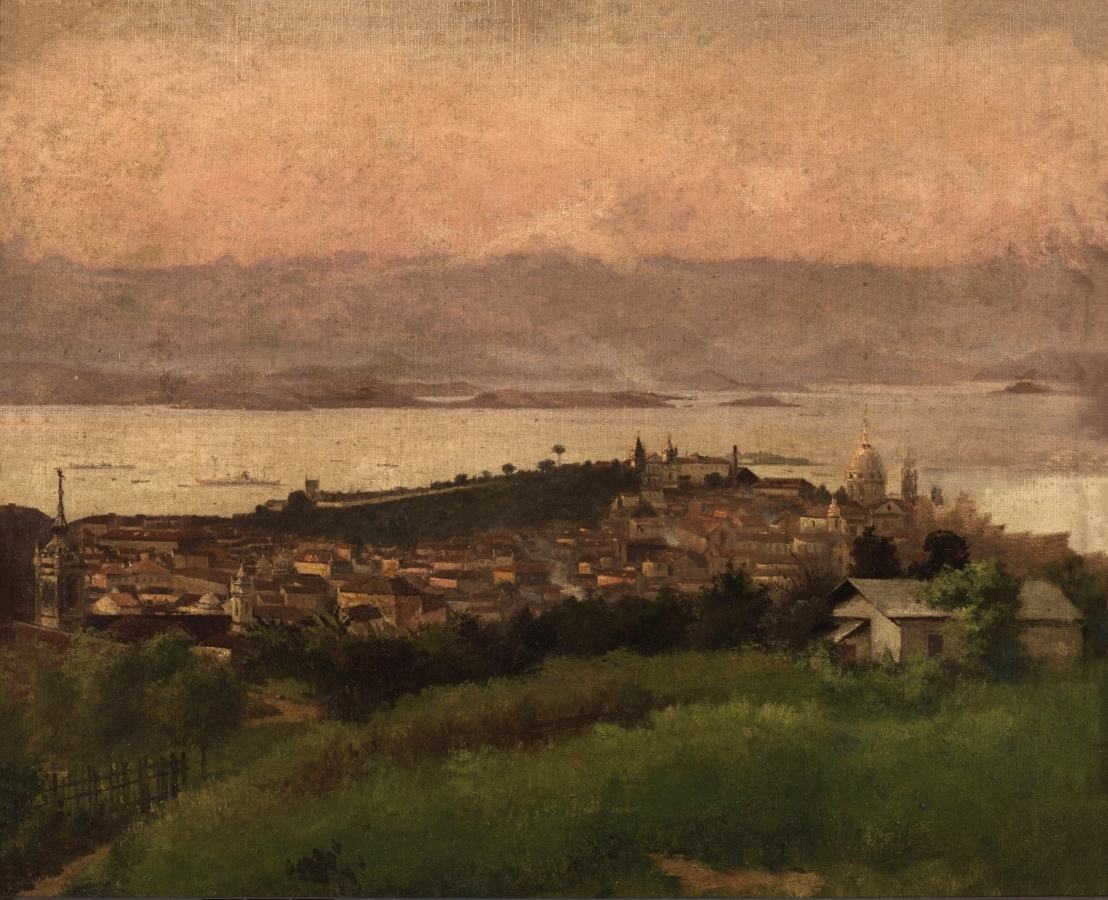
It’s the only known case in world history where the capital of a European country was located in one of its overseas colonies on another continent.
How did that happen? Our journalist and researcher of Portuguese history, Alena Khazinurova, explains.
In 1806, Napoleon, who by then had already extended his influence across much of Europe, launched the Continental Blockade against Britain—one of the few countries he had failed to conquer. Portugal refused to join the blockade, citing the Anglo-Portuguese Alliance, a treaty dating back to the 14th century.
A year later, Napoleon decided to invade Portugal. French troops entered the country and advanced to Lisbon with little resistance. Portugal was in poor shape at the time, having only recently recovered from the devastating 1755 earthquake. The political and economic situation was, to put it mildly, dire.
Officially, the country was ruled by Queen Maria I the Mad. But as her nickname suggests, she had been declared incapable of governing due to severe mental illness. In practice, the kingdom was run by her son, Prince Regent João VI.
As the French army advanced, João VI desperately tried to negotiate with Napoleon. He hastily declared war on Britain, sent envoys offering surrender under increasingly humiliating terms—but none of it worked.
On November 29, 1807, the prince came up with what he saw as the only remaining option: he gathered the royal treasures, his family, and an entourage of around 15,000 people, boarded a fleet of ships, and fled… to Brazil, leaving Portugal to fend for itself.Essentially, it was: “Good luck, everyone. Take care. We’re sailing away.”
Just two days later, the French army entered Lisbon without firing a single shot. The irony is that after their grueling march across the Iberian Peninsula, the French had lost all their horses, abandoned their cannons in the mud, and stumbled into Lisbon on foot—barefoot and dressed in rags, looking more like a crowd of exhausted beggars than Europe’s greatest army. Had the Portuguese offered even minimal resistance, they could likely have defeated them with ease. But no such order was ever given.
The French were driven out of Portugal by the British just ten months later. The Portuguese royal court, however, remained in Brazil until 1821, when João VI—who had become king after Maria I’s death—finally agreed to return home.
For those 13 years, he ruled Portugal from Rio de Janeiro, sending royal decrees across the Atlantic by ship. Since each voyage took two to three months, his rule over Portugal was largely symbolic. Day-to-day decisions were made by local officials and, increasingly, by the British, who wielded considerable influence in the country.
During that period, the state was officially renamed the United Kingdom of Portugal, Brazil and the Algarves. Its capital was effectively Rio de Janeiro, where the royal court resided. Although no formal decree ever declared Rio the capital, everyone understood the reality. In the age of absolute monarchy, one simple rule applied: wherever the king was, that was the capital of the empire.
Just one year after João VI sailed back to Lisbon, Brazil, under the leadership of his son Pedro I, declared independence.
But that’s a story for another time.
