



 RU
RU
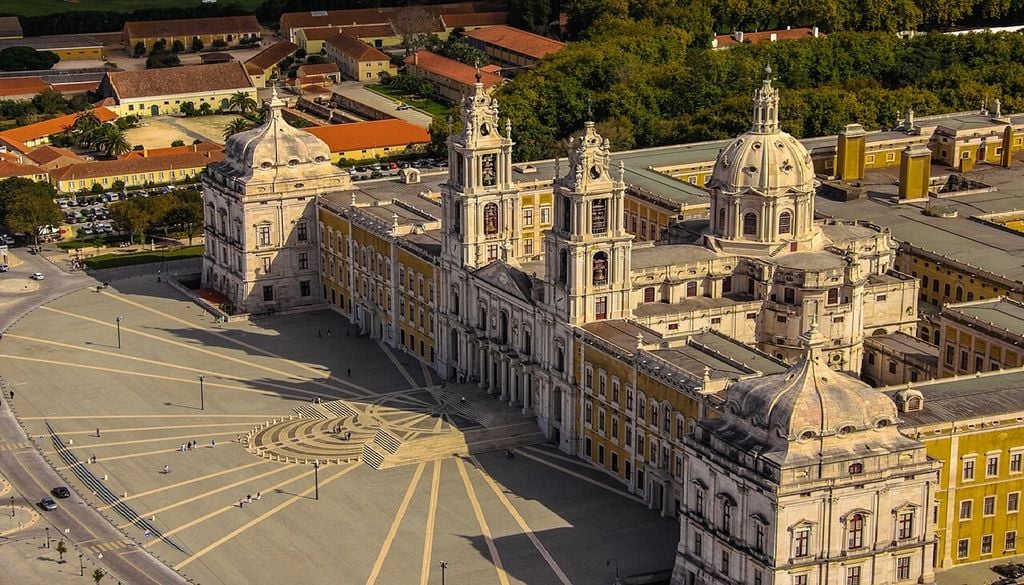
After two years of conservation and restoration work, Portugal’s National Palace of Mafra is finally set to reopen to visitors in July. The project marks the most extensive restoration campaign in the history of the monument, which was commissioned by King João V in the 18th century.
The €7.3 million project was financed through Portugal’s Recovery and Resilience Plan (PRR). During the works, specialists reinforced vaults, repaired structural cracks, cleaned stone masonry, restored wooden elements, and carried out extensive interventions in the basilica, library, and surrounding grounds. Despite a harsh winter and the delays it caused, the reopening schedule remained on track.
The palace itself is remarkable for its scale, comprising around 1,200 rooms, more than 4,700 doors and windows, 156 staircases, and 29 inner courtyards. It is also home to the world’s largest bell ensemble, with 119 bells divided between two carillons, six historic organs, and one of the most significant libraries of the European Enlightenment.
One of the project’s greatest challenges was the installation of modern climate-control and humidity-regulation systems in an 18th-century building without compromising its historic fabric. At the same time, preparations are continuing for the relocation of the National Museum of Music, whose collection includes around 1,000 musical instruments dating from the 16th to the 20th centuries.
The restoration has also revealed the stonework’s original colours. Decades of dust and pollution had concealed the natural yellow and red hues of lioz limestone, leaving many architectural details appearing uniformly grey.
For Portugal, the project represents more than the restoration of one of the country’s most important national monuments. The works form part of preparations for the 300th anniversary of the basilica’s consecration in 2030 and constitute another step in safeguarding a UNESCO World Heritage Site, a designation the palace has held since 2019.
